

Step-by-Step Guide to Setting Up a Pallet Wrapping Station in Your Warehouse
Efficient pallet wrapping plays a vital role in protecting goods during storage and transport. A well-planned pallet wrapping station can reduce product damage, improve load stability, and significantly speed up warehouse operations. Whether you’re upgrading from manual wrapping or setting up a new warehouse area, this guide explains how to create an effective pallet wrapping station that improves productivity while keeping costs under control. ________________________________________Why a Dedicated Pallet Wrapping Station Matters Many warehouses start with handheld stretch wrap, but as volumes grow, this approach can quickly become inefficient and inconsistent. A dedicated pallet wrapping station helps you: • Improve load stability and reduce transit damage • Achieve consistent wrapping every time • Reduce film waste and operator fatigue • Increase throughput during busy periods For growing operations, pallet wrapping automation is often one of the fastest ways to see operational gains. ________________________________________
Step 1: Assess Your Wrapping Requirements Before choosing equipment or layout, take time to evaluate how your warehouse operates. Key questions to ask: • How many pallets are wrapped per day? • Are pallet sizes and weights consistent? • Do loads require extra stability for transport? • How much space is available for a wrapping station? Answering these questions will help determine whether a manual turntable wrapper, semi-automatic machine, or fully automatic system is the best fit. ________________________________________
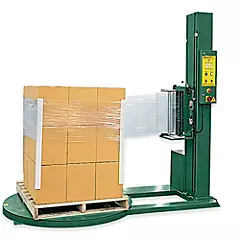
Step 2: Choose the Right Pallet Wrapping Machine The most common pallet wrapping machines used in warehouses include: Turntable Pallet Wrappers Ideal for consistent pallet sizes and moderate volumes. These machines rotate the pallet while applying stretch film evenly. Rotating Arm Wrappers Best for unstable or very heavy loads. The pallet stays stationary while the arm rotates around it. Mobile Pallet Wrappers Useful for wrapping pallets in multiple locations or where space is limited. Selecting the right machine ensures faster wrapping, improved safety, and better film control. ________________________________________
Step 3: Select the Correct Stretch Film Using the wrong stretch film can lead to wasted material and poor load stability. Consider: • Film thickness (micron level) • Pre-stretch capability • Load weight and shape • Environmental factors such as cold storage Modern machines paired with high-quality film can significantly reduce overall film consumption while maintaining load security. ________________________________________
Step 4: Plan the Station Layout An efficient pallet wrapping station should be positioned to support workflow, not disrupt it. Best practice layout tips: • Place the wrapper near dispatch or goods-out areas • Allow clear access for forklifts or pallet trucks • Keep film rolls and consumables within reach • Ensure safe walkways around the machine Good layout planning reduces bottlenecks and improves operator safety. ________________________________________
Step 5: Focus on Operator Safety and Training Even semi-automatic machines require proper training to operate safely and efficiently. Key safety considerations include: • Emergency stop buttons clearly accessible • Safe loading and unloading procedures • Clear signage and marked safety zones • Regular operator training and refreshers Well-trained operators not only reduce risk but also ensure consistent wrapping quality. ________________________________________
Step 6: Maintain Your Pallet Wrapping Equipment Routine maintenance is essential to keep your pallet wrapping station running smoothly. Maintenance essentials: • Regular cleaning of rollers and turntables • Checking film carriage tension • Inspecting electrical components • Scheduling professional servicing Preventative maintenance reduces downtime and extends the lifespan of your equipment. ________________________________________
Step 7: Monitor Performance and Optimise
Once your pallet wrapping station is operational, track performance metrics such as: • Pallets wrapped per hour • Stretch film usage • Load failure rates • Downtime incidents These insights help identify opportunities to fine-tune settings, reduce waste, and improve efficiency. ________________________________________
Choosing the Right Partner for Pallet Wrapping Solutions Working with an experienced packaging machinery supplier ensures you get the right equipment, support, and consumables for your operation. Sontex offers a wide range of pallet wrapping machines, stretch films, and expert advice to help businesses create efficient, reliable wrapping stations. ________________________________________
Final Thoughts Setting up a pallet wrapping station is not just about installing a machine — it’s about improving workflow, safety, and consistency across your warehouse. With the right planning, equipment, and ongoing maintenance, pallet wrapping automation can deliver immediate and long-term operational benefits. If your business is handling increasing pallet volumes, now may be the perfect time to review your current process and invest in a dedicated pallet wrapping solution.